Imagine your backyard – lush palms, a BBQ under the stars, no mud in sight. Now imagine a massive hole ripped open for a plumbing fix. Nightmare, right? In Gold Coast (and beyond), the new generation of plumbers has a clever fix: no dig pipe relining, a trenchless method that repairs damaged underground pipes from the inside without tear-outs.
It’s like giving your old plumbing a superhero cape – reinforcing it from within so you never have to bulldoze your yard. I remember a mate who dreaded having his garden turned into a bomb site for a simple sewer repair. With no-dig relining, that mess is history. Let’s dive into how this magic trick works and why it’s often worth every penny.
What is No Dig Pipe Relining?
Think of no dig pipe relining (often called trenchless pipe relining) as plumbing wizardry. Instead of digging trenches, a flexible liner soaked in resin is inserted into the broken pipe. Once inflated and cured, it forms a new inner pipe that’s seamless and jointless. Essentially, you get a “pipe within a pipe.” Pipe relining in Melbourne and pipe relining in Sydney is rising in popularity with a similar rise in demand on the Gold Coast. .
This cured-in-place pipe (CIPP) technique creates a tough, corrosion-resistant new pipe inside the old one. According to plumbing experts, CIPP is a trenchless method that’s widely used for sewer, water, and gas pipelines. In fact, Wikipedia describes trenchless pipe lining as a way to create a new pipeline inside the existing one with minimal digging.
By using no-dig relining, you avoid the chaos of jackhammers and bulldozers. You keep your gardens, driveways, and “man cave” garage intact. In Australia, this method is getting popular with homeowners and councils because it’s less disruptive.
The Gold Coast City Council, for example, now requires replacing or relining old sewer pipes (like asbestos-cement or clay pipes) on development sites to boost infrastructure longevity. You can read more in the City of Gold Coast’s official guideline on water and sewer asset replacement. That tells you how serious local authorities are about modern pipe rehab. (It’s not just a fad – it’s quickly becoming best practice.)
How Does No Dig Pipe Relining Work?
Here’s the secret sauce in plain English. First, a plumber pins down where the problem is using a tiny camera snake (yes, like the one on Grey’s Anatomy but for pipes!). Once the spot is known, they clean the pipe with a super-pressured water jet (called a hydrojet) to blast away roots, debris and gunk. With a squeaky-clean pipe ready, they insert a felt or resin-coated liner.
This flexible tube is positioned so it lines the damaged section. Then a special bladder is inflated inside that liner, pressing it against the old pipe’s walls. The resin cures (hardens) in place, effectively forming a new, jointless pipe. Finally, they remove the bladder and inspect again with the camera. Voilà! A brand new pipe is born inside the old one, with no need for excavation.
In practical steps, a typical relining process looks like this:
-
- Camera Inspection: A drain camera locates the break or blockage.
-
- High-Pressure Cleaning: A hydro-jet flushes out roots and debris to prep the pipe.
-
- Resin Liner Insertion: A felt-lined tube soaked in epoxy resin is threaded into the pipe.
-
- Inflation & Curing: The liner is inflated like a balloon to press it tight and left to harden, bonding to the pipe walls.
-
- Final Check: A last camera pass ensures the new lining is solid and leak-free.
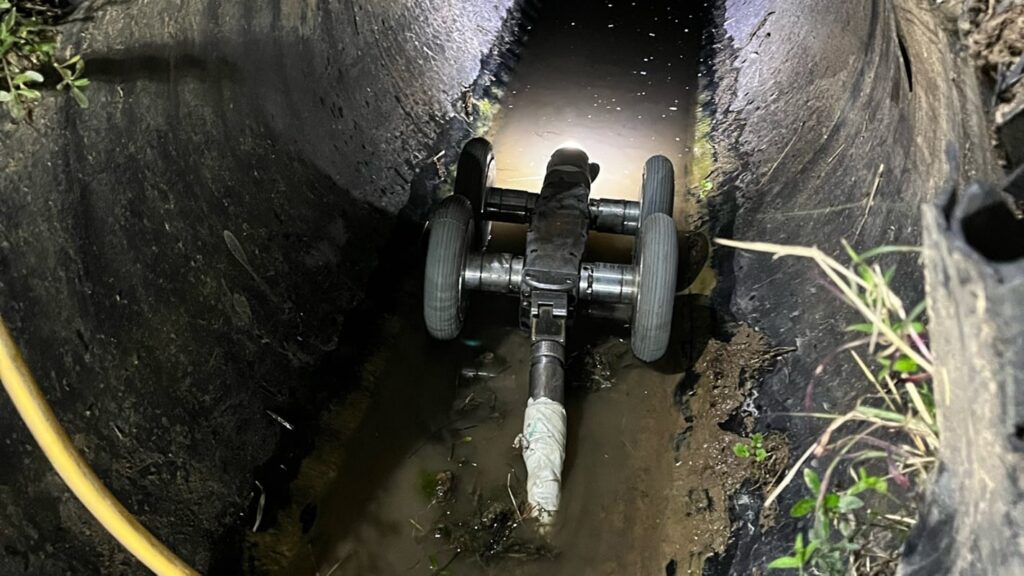
This whole process usually takes just a few hours to a day, depending on the pipe length. The amazing part? No trenches. The team literally works from an access point like a manhole or a small excavated hole only large enough for the camera and equipment. Your lawn? Undisturbed. Your driveway? Totally intact. In fact, a trenchless pipe relining company puts it simply: this method lets them “fix pipes without needing to excavate your property, saving you time and money”.
To see it in action, imagine inserting a clear silicone tube into a cracked drain, inflating it, and hardening it into a fresh new pipe – all in one go. That’s basically it. In engineering terms, it’s part of the broader trenchless technology field, which Wikipedia defines as a set of subsurface construction methods requiring few or no trenches.
Instead of “dig and replace,” it’s all “go inside and reform.” By the way, trenchless rehabilitation methods generally come out cheaper than full dig-and-replace solutions, especially when you factor in all the time and hassle they save.
Benefits of No Dig Pipe Relining
Wondering why relining is worth the hype? In a word: disruption. Traditional pipe repairs can be a months-long ordeal of jackhammers, heavy machines, noise and torn-up landscapes. No thanks! No-dig relining flips that scenario on its head:
-
- Minimal Disruption: Only small access points are needed (like a hole the size of your fist), so your garden, paving and yard stay almost completely intact. Life goes on as normal while the work is done.
-
- Cost-Effective: Avoiding big digs means you save big on labour and restoration costs (no new lawn or concrete to pay for). Long-term, it often costs less than trenching.
-
- Quick Turnaround: With less digging and backfilling, jobs finish faster. Many repairs are done same-day or in a few hours, not days or weeks. You get your plumbing flowing again in no time.
-
- Durability: The new resin liner is actually stronger than PVC. One provider notes the relined pipe can last up to 50 years. You get a jointless, corrosion-resistant pipe that resists cracks, roots and leaks. Think of it as upgrading your old pipe to industrial-strength.
-
- Environmentally Friendly: Less digging means less waste (no truckloads of soil out, no fill dirt in) and less impact on the planet. It preserves gardens, tree roots, and the overall landscape. Plus, fewer heavy machines means a smaller carbon footprint.
-
- Guaranteed Quality: Good relining work usually comes with a warranty (often 10–25 years on labour, plus material guarantees). For example, some manufacturers back their liners with a 50-year material warranty.
Insert Table: Traditional vs No-Dig Pipe Repair
| Feature | Traditional Dig & Replace | No-Dig Relining |
|---|---|---|
| Excavation | Extensive open trenching (tear up lawn/driveway) | Minimal or none; uses existing access points |
| Disruption | High – long project, noisy machines, huge mess | Low – quick fixes, your yard stays intact |
| Time | Long – days or weeks (including restoring surfaces) | Short – often done in hours to 1 day |
| Cost | Very high (labour, equipment, landscaping repairs) | Usually lower long-term (less labour and restoration) |
| Durability | New pipe is standard PVC/metal, ~30-50 year life | New lining is stronger (resin), often >50 year life |
| Environmental Impact | Lots of waste dirt, heavy machinery emissions | Less waste and fuel use; preserves flora and fauna |
Having all these advantages means no dig relining is often the smarter choice if your pipes are repairable. You dodge the drama of a construction site in your own home. One happy customer review even said the plumbers “saved the day” by fixing severe pipe damage with this method, without the homeowner needing to endure a demolition-style renovation.
If you’re a Greenies-out-there or just hate dirt, relining’s eco creds are a big win. It literally prevents damage to gardens and roadways, which is why trenchless rehabilitation is heralded as a “green solution” in plumbing. Even water quality gets better – leak-free pipes mean no unexpected contaminants seeping in.
Is No-Dig Relining Worth the Cost?
You might be thinking: “Sure sounds cool, but how much?” The truth is, no dig relining can have a higher sticker price per metre than a bare excavation, especially for small fixes. However, those initial costs often pay for themselves. In Australia, a typical residential relining job might run $3,000–$15,000 depending on pipe length and complexity. The same repair via full replacement could easily hit $25,000 or more once you factor in hole digging, new pipes, and redoing your lawn or driveways.
Those numbers come from industry data: the average relining job can be up to 40-60% cheaper overall compared to old-school pipe replacement. Plus, consider this: relining usually comes with 25–50 year guarantees on the new pipe, whereas excavation fixes rely on standard PVC warranties. So you might pay more up-front for relining equipment and epoxy, but you won’t be paying bulldozer and landscape-restoration bills.
Here are some cost factors to keep in mind:
-
- Length and Diameter of Pipe: Longer jobs = more material (liner and resin) and labour.
-
- Pipe Condition: If a pipe is completely collapsed or missing, relining might not work (that would need at least a spot dig). Relining is best for cracks, joint leaks or tree root breaches.
-
- Access: Pipes under concrete or deep below slab can make any job pricier. But even then, relining often beats chiseling up concrete.
-
- Number of Bends/Junctions: More corners or manholes can add time.
-
- Insurance: In Australia, jobs over $20k trigger builder’s warranty insurance, so shops sometimes split projects or ensure quotations carefully.
But generally, once you balance out the hidden costs, most homeowners find relining worth it. And because the process is faster, you save time too. As a bonus, many quotes include the CCTV camera inspection and cleaning as part of the package, so you know exactly what you’re fixing before committing.
Gold Coast & Australian Context
Down under, there are a few extra reasons to love trenchless relining. Many Aussie homes (especially older ones) still have clay, cast iron or asbestos-cement pipes – materials prone to cracking or root invasion. No-dig relining is a perfect upgrade for these: for instance, Gold Coast Council rules now require developers to replace or reline aging sewer pipes before new houses go up. That’s because they want to avoid future broken mains. In simpler terms, the City of Gold Coast sees pipeline relining as critical infrastructure work.
Plus, living near the ocean can be tough on plumbing. Salt-laden air and shifting sands accelerate pipe decay. Relining inserts corrosion-resistant epoxy liners that can better handle the coastal conditions (and pesky root intrusion from those giant Frangipani trees on the property line!).
When choosing a contractor in Australia, look for the right certifications. A reputable relining pro should be licensed and use WaterMark-approved epoxy (WaterMark is Australia’s national plumbing product standard).
The Australasian Corrosion Association (ACA) even certifies applicators in pipe lining. Asking about ACA qualifications or ASTM standards (like ASTM F1216, a common cured-in-place-pipe spec) can save headaches. A qualified crew will give you paperwork on their materials and a solid warranty (10+ years on labour is a good sign).
In short, if you’re in the Gold Coast or anywhere in Oz, no-dig pipe relining isn’t just a clever gimmick – it’s recognized by standards and councils as a modern solution. It aligns with our love of the outdoors: fixing infrastructure without wrecking parks, pools or patios.
Conclusion
By now it’s clear: no dig pipe relining is a game-changer for plumbing repairs. It’s a high-tech way to fix leaks, cracks, and blockages without turning your yard into a construction zone. You get strong new pipes, less mess, and often a lower final bill. For busy young professionals on the Gold Coast who care about their home’s value and the environment, this is plumbing nirvana.
If you suspect a hidden leak or have recurring blockages, it’s worth getting a modern inspection. Many plumbing companies offer CCTV drain checks for free. Ask them about trenchless relining – you might be amazed how your old pipes can be revived. After all, why settle for old-school havoc when there’s a smarter, cleaner fix?
Next time a blocked drain threatens your day, remember the no-dig alternative. Talk to a licensed relining plumber to see if your pipes are candidates. Save your landscaping, save your time – and enjoy hassle-free plumbing.
Frequently Asked Questions
How does no dig pipe relining actually work?
No dig pipe relining repairs damaged pipes from the inside without needing to excavate your yard. A flexible liner coated in resin is inserted into the existing pipe, inflated, and then hardened to create a strong, seamless new pipe within the old one. It’s fast, minimally invasive, and ideal for fixing cracks, leaks, and root intrusion.
Is pipe relining permanent or just a temporary fix?
Relining isn’t a band-aid — it’s built to last. Most relined pipes come with warranties of 25–50 years, and the resin material used is often stronger than standard PVC. With proper installation by a licensed professional, a relined pipe can easily outlive traditional repair jobs.
Can any damaged pipe be relined without digging?
Not always. No dig pipe relining works best when the pipe is still structurally intact, even if it's cracked or leaking. If the pipe has completely collapsed or is severely misaligned, traditional excavation or pipe bursting may be needed first. A CCTV inspection is usually the first step to determine if your pipe is a good candidate.
How much does no dig pipe relining cost in Australia?
Costs vary based on pipe length, condition, and access, but on average, no dig pipe relining in Australia ranges from $3,000 to $15,000. While this might seem high initially, it often ends up being cheaper than traditional methods once you factor in the savings on excavation, landscaping, and time.
Enjoy clear drains and happy plumbing! Remember: the next time you suspect a serious pipe issue in your Gold Coast home, ask about the trenchless solution. You might just save yourself a whole lot of digging – and grief.