Pipe relining services are fast becoming the favoured solution when it comes to renewing damaged drains in Gold Coast and Brisbane. Whilst traditional drain replacement still has a place, pipe relining offers a more economical and efficient solution for fixing problem drains. In addition, pipe relining offers a long-lasting solution, meaning that you won’t need to worry about drain replacement any time soon.
Let’s look at what pipe relining is, what the benefits of drain relining are, and why more residents are choosing to reline their sewer or stormwater pipes in Gold Coast & Brisbane instead of conventional pipe replacement.
Which is the Best Solution for a Blocked Drain?
Traditional Drain Replacement
Traditional drain replacement involves excavating the earth in order to access a damaged or collapsed drain. The extent of the damaged section(s) determines the area to be excavated. If the damage is extensive, a large length and area will be dug up.
Digging up the drains requires the removal of all of the objects above the drain, such as cutting concrete, removing landscaping, lifting tiles, etc. The pipe is then dug up and exposed, either by digging by hand or with an excavator. Once the pipe has been exposed, the damaged section of drain is replaced with a new pipe. In some cases, additional sections of pipe will need replacing, especially if existing pipes are very old, show signs of damage,, or if the join between the old drain and new drain is ineffective.
Benefits of traditional pipe replacement:
-
- The area you dig up gets an entirely new pipe system, eliminating all existing issues and concerns about the integrity of the old, surrounding pipe material.
-
- Digging allows for modifications to the drainage system, such as changing the pipe diameter (upsizing), rerouting the line, or adding in additional pipe work.
-
- By digging up the pipework the surrounding soil and entire pipe can be accessed which allows for a thorough inspection and correction of other issues, such as an improper slope, or poor bedding.
Drawbacks of traditional pipe replacement:
-
- It requires digging. Digging takes more time and manpower—hence it costs more.
-
- Excavation can damage gardens and infrastructure. There’s a bigger mess and time and potential costs involved in remedying the damage.
-
- Digging up and installing new pipes can be disruptive to residents and workers on the property, as it often involves noisy equipment, and people may need to vacate the area during work.
Pipe Relining Overview
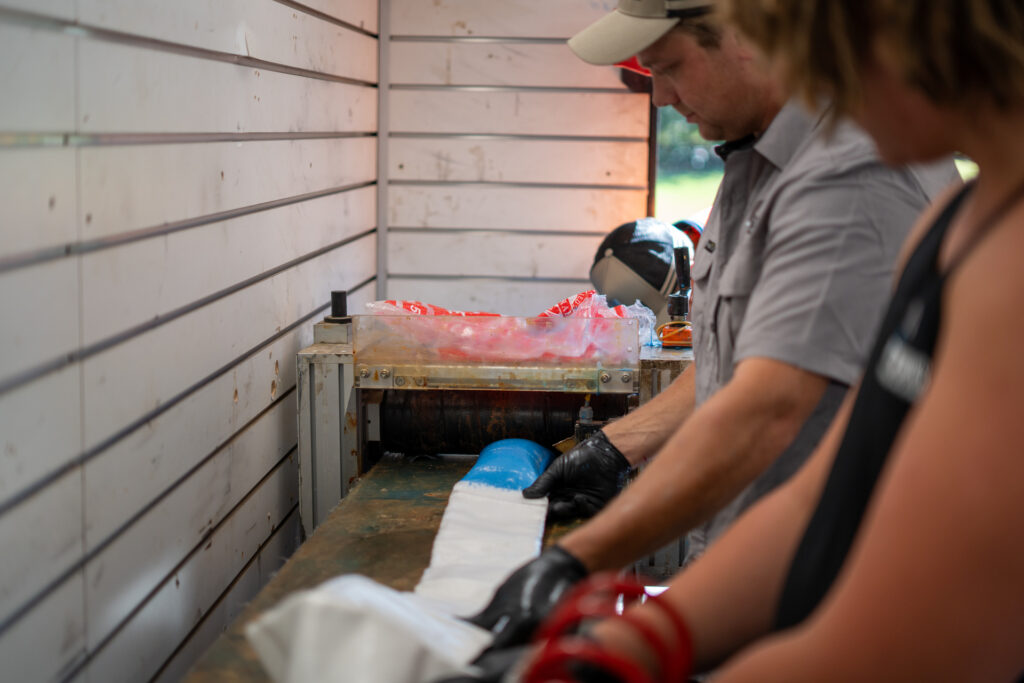
Pipe relining creates a new pipe within an existing pipe. An epoxy-resin liner is fed into the existing, damaged pipework and is inflated so that it fits securely. The resin then cures over a couple of hours, forming a new structural pipe. The high-quality new pipe is durable, and is resistant to corrosion, extreme water pressure and heat. Pipe relining is tailored to each site, so small sections can be upgraded, or the full length of pipe.
Benefits of pipe relining:
-
- It’s minimally invasive. The earth doesn’t need to be dug up, so there’s usually minimal damage to the gardens, lawns and structures like decks and driveways. Pipework that runs underneath your house or buildings can also be repaired without damaging the buildings above them.
-
- It creates a seamless internal pipe surface, so there’s no possibility of leaks or tree roots intruding through seams or joints.
-
- The new pipe has a non-porous surface, so it is resistant to build up. There’s less grime getting stuck to it, and fewer blockages.
-
- It costs less than traditional pipe replacement methods, in the main part, because it’s quicker and requires less humanpower.
-
- The new drain created through pipe relining is very durable and strong. It can last up to 50+ years. (SEQ Pipe Works offer a 25-year product warranty on their relined pipe solutions.)
Drawbacks of pipe relining:
-
- Not every plumber can successfully complete the job. Pipe relining requires specialised equipment and an experienced team
-
- The pipework cannot be majorly altered. Because the existing pipe is relined, the new pipework follows the route of the existing pipework.
How Pipe Relining Works
Here’s a step-by-step run down of SEQ Pipe Works’ approach to sewer or stormwater pipe relining:
Step 1) We inspect the internal surfaces of the pipes using a CCTV drain camera (a small camera attached to a cable that is fed through the drain system). As the camera traverses the pipes, we watch the footage, and pinpoint the exact location of blockages and/or pipe damage. This helps us determine if pipe relining is needed and viable.
Step 2) We thoroughly wash out the pipes with a high-pressure water jet. This removes any debris so that resin liners will fit to the actual size of the pipe and also prepares the pipe for optimal adhesion. These liners can be used in any size of pipe above 32mm in diameter.
Step 3) If we’ve observed any obstructions in the pipe, such as tree roots, we use robotic cutting methods to remove the object before we reline the pipes.
Step 4) We then proceed to measure the length of the damaged section of pipe to ensure we choose the correctly-sized liner. We then insert a flexible fiberglass or polyester liner saturated with epoxy resin into the existing pipe, and inflate the liner within the old pipe until it firmly presses against the pipe walls.
Step 5) We allow the epoxy to cure and harden via ambient temperature. In some cases, we may use steam or hot water to cure the resin.
Step 6) When completely cured, we do a final CCTV pipe inspection to ensure the pipe is correctly positioned and completely sealed.
The result is a smooth and corrosion-resistant pipe that will last for decades.
Pipe Relining – Minimising Disruption and Costs
There’s good reason to opt for pipe relining over trench pipe replacement. Digging up the ground and/or cutting into infrastructure not only takes time and human resources, but there are restoration costs involved, which usually need to be covered by the property owner(s).
Responsibility for clean up after trench pipe replacement
Generally speaking, after completing a traditional pipe replacement, plumbers backfill the trench with the soil they removed. They remove construction debris associated with the work (pipe offcuts, packaging), and do a quick tidy up to ensure the area is safe. Costs for soil removal, skip hire, excavator hire and site reinstatement will usually be included in their quote.
However, generally plumbers aren’t responsible for restoring the landscape to its original condition. They won’t:
-
- Replant garden beds (which costs on average $100–$250 per m²)
-
- Re-lay grass or turf (average cost $25–$45 per m²)
-
- Restore paving (average cost $70–$160 per m²)
-
- Repair driveways or concrete (it commonly costs between $800 and $4000+ to properly restore the concrete after a driveway is cut open for pipe replacement, even more if the concrete is coloured, exposed aggregate, or if the whole area needs replacing to hide the cut marks).
-
- Restore decking or structures (average cost $500 – $3,000 for most small residential repairs).
The cost to reinstate the ground and landscaping following trench pipe repair can be significant.
Pipe relining, on the other hand, eliminates the need for digging, as the work is typically done through existing access points like inspection pits or cleanouts. Paths, driveways, slabs and gardens usually go untouched.
The Benefits of Pipe Relining for Strata Properties
When there are wastewater pipe issues on strata properties, everybody has to pay for the cost of repair. For this reason, strata managers need to be able to prove the case for investment in drain repair.
Pipe relining offers a more affordable option for strata property owners than traditional pipe replacement. The cost of relining pipes is less than pipe replacement, there’s no digging involved, and there’s minimal, if any, restoration costs.
The other advantage of pipe relining is that it doesn’t disrupt residents or workers on a property. There’s no noisy digging equipment, so there’s no need to vacate the property during digging work. The process of CCTV drain inspections and pipe relining is all rather quiet, so everyone can continue on with their day.
Replacement VS Relining: Comparison
| Feature | Newly Installed Wastewater Pipe | Epoxy-Resin Cured-in-Place (Relined) Pipe |
|---|---|---|
| Expected Lifespan | 50–100 years for PVC/HDPE; 40–60 years for concrete | 50+ years (premium systems easily exceed 50 years) |
| Corrosion Resistance | PVC/HDPE highly resistant; concrete may corrode over time | Highly resistant to corrosion, root intrusion, and chemical attack |
| Seamless vs Joints | Joints may leak or allow root intrusion over time | Seamless, jointless liner reduces future leaks and root ingress |
| Installation Disruption | Requires excavation — can be costly and disruptive | Trenchless; minimal disruption to gardens, driveways, or structures |
| Maintenance Needs | Occasional inspection for joint leaks, cracks, or blockages | Very low maintenance; smooth inner surface resists buildup |
| Initial Cost | Higher due to excavation and pipe replacement | Often lower total cost for pipe renewal without excavation |
| Site Restoration Costs | Can be $1,500–$8,000+ for concrete, landscaping, paving, and gardening | Typically $0–$500; minor tidy-up only around access points |
Pipe Relining Gold Coast and Brisbane
For homeowners, strata managers, and property managers needing pipe relining in Gold Coast and Brisbane, SEQ Pipe Works offers a fast, no-dig solution to blocked drains and damaged sewer and stormwater pipes. Our trenchless method restores your drains with minimal disruption, lower costs, and long-lasting, corrosion-resistant pipes.
Choose pipe relining to protect your garden, driveway, and property while enjoying an efficient and reliable drain repair.
Contact SEQ Pipe Works for a cost-effective, mess-free solution to drain pipe repair.